
Context and Challenges
When COVID-19 emerged in 2020, UNICEF needed to understand what people around the world were asking and worrying about. Their questions about the disease, its symptoms and its consequences changed from week to week. Vaccination soon became central to them.
UNICEF country offices had to answer these questions quickly and accurately. The risks facing affected populations and the public scrutiny of UNICEF and its peers made the task more sensitive.
Our Role
Research for Purpose worked with UNICEF’s Private Fundraising and Partnerships division from early 2020 to 2022 to monitor news and social media coverage of the pandemic. We tracked the concerns and questions people expressed online, and we assessed the risks for affected populations and the reputational risks for UNICEF and comparable organisations.
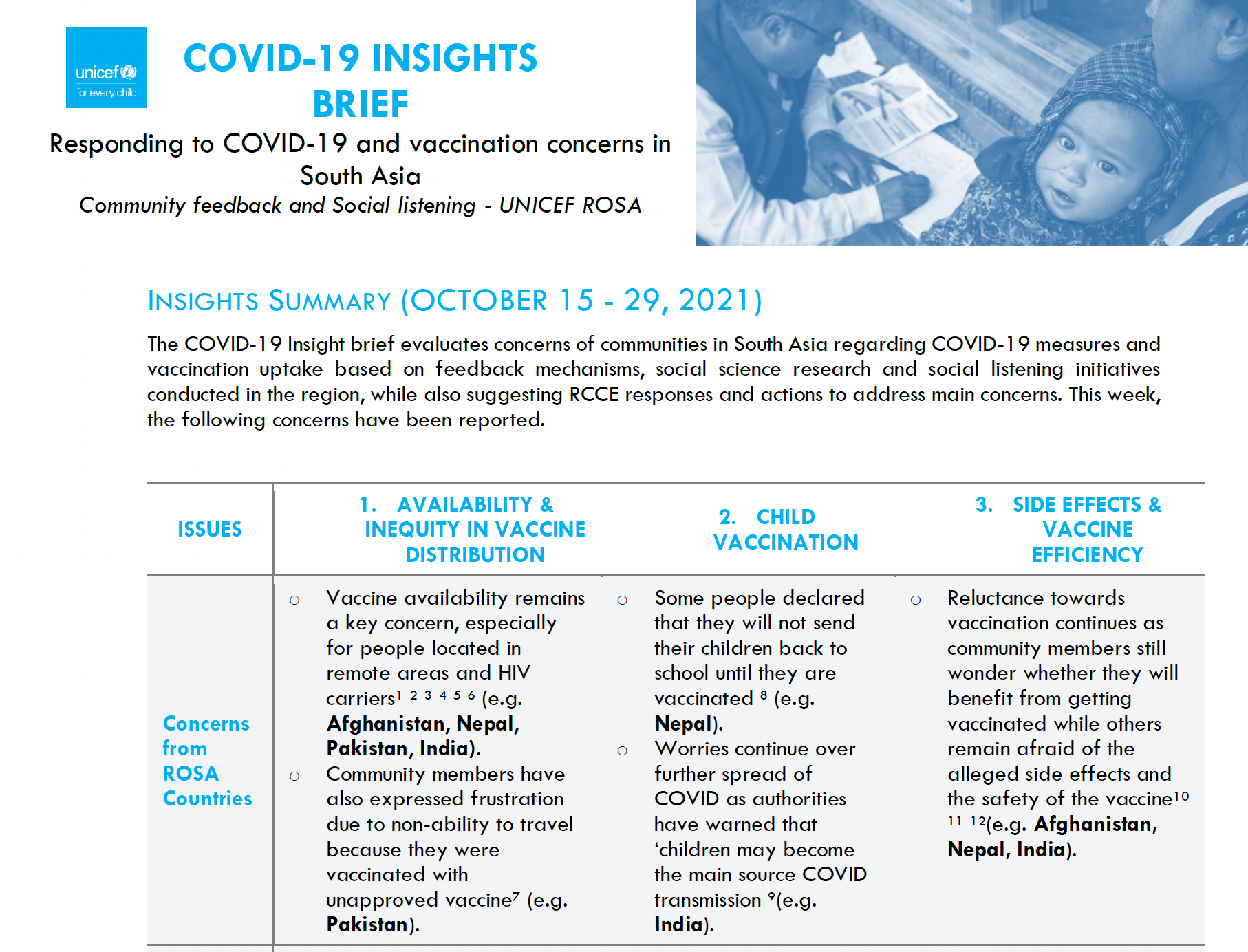
Our Content Insight Tracker brought this work together in one regular report. It summarised trending stories by country from online news, social media and Google searches, and it highlighted the questions people searched for most. It also reviewed the best performing content from UNICEF Global, National Committees and regional offices, compared it with content from WHO and other peers, and noted relevant news from partners. Each edition opened with considerations on how teams could turn the insights into communications action.
Live dashboards on global COVID-19 and vaccination conversations, with regional and country views, gave staff direct access to the data. An alert system flagged emerging conversations early so that teams could prepare responses. As the pandemic evolved, the tracker extended to other emergencies, including Afghanistan and the war in Ukraine.
Results
The monitoring began in a small number of countries and was then adopted by UNICEF country offices globally. Offices used it to identify emerging questions and concerns and to respond to them. Communications teams drew on it for content ideas, because it showed which UNICEF and peer content resonated with key audiences. It also gave offices a clearer picture of how partners and donors were positioning themselves.
Combining public questions with evidence of which content performs well gave teams both what to say and how to say it.