Contexte and Challenges
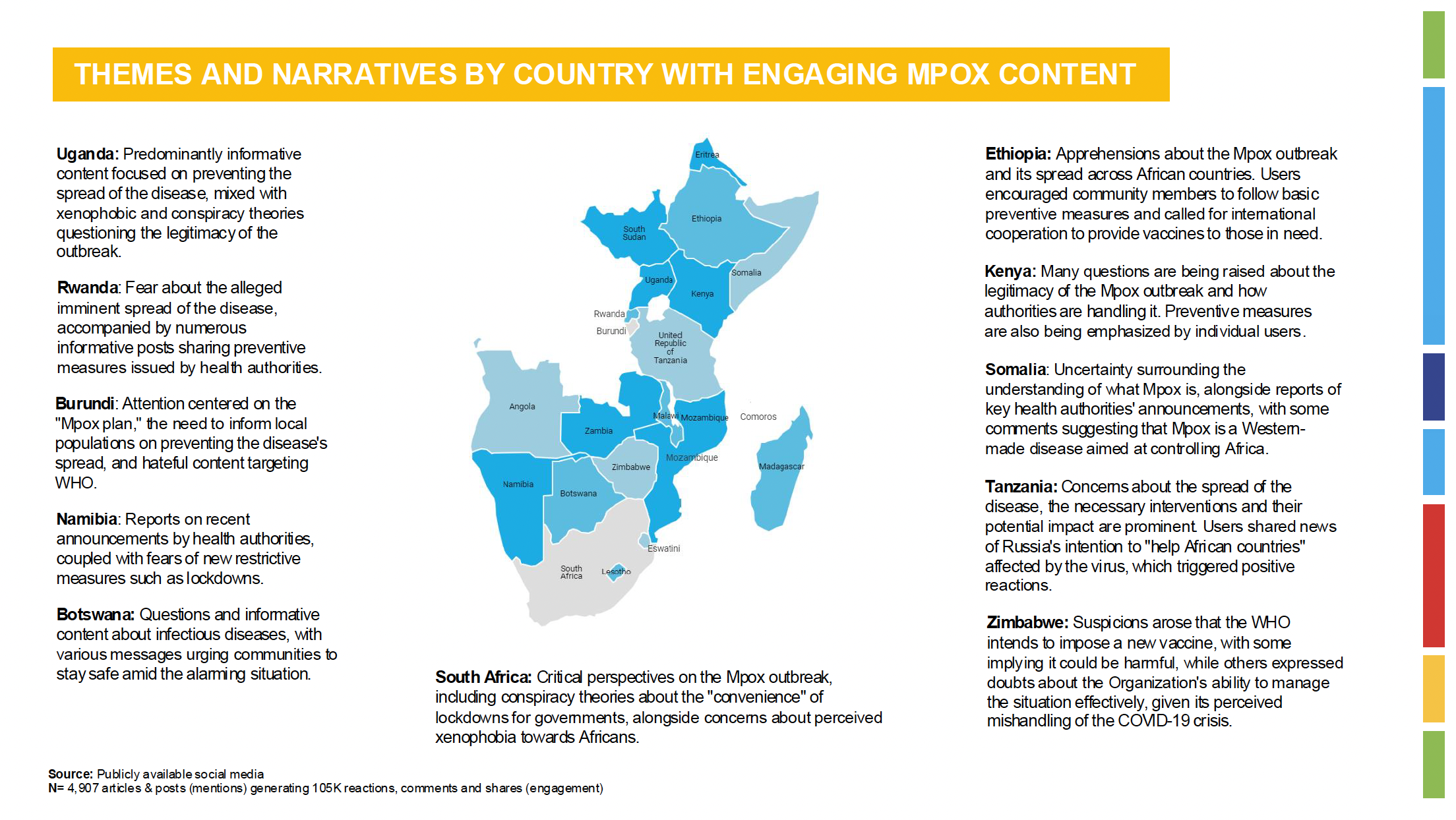
Eastern and Southern Africa has faced several public health emergencies in recent years, including cholera, mpox and Ebola. Rumours undermined trust in the response. Some claimed that cholera spread through vaccines, others that mpox had been fabricated for political gain.
The UNICEF Eastern and Southern Africa Regional Office (ESARO) needed fast evidence on community concerns to support the response in many countries at once.
Our Role
Since August 2024, Research for Purpose has supported the social and behaviour change team at ESARO with social and community listening. We work in collaboration with the WHO Africa Infodemic Response Alliance (AIRA) and other partners.
Our reports combine online listening with community feedback, rapid assessments and epidemiological insights. They identify concerns, questions, positive and negative narratives, and emerging misinformation that could put the public health response at risk, by disease and by country. A single cholera analysis, for instance, covered ten countries from Angola to Zimbabwe. Each report ends with suggestions for communication and programming.
We also produce strategic reports on audience interests and UNICEF’s performance, and we identify influential potential partners on child rights, sexual and reproductive health and rights, and education.
Results
The main impact has been speed. Partner organisations and governments receive rapid information on what people are worried about, the questions they ask and the information gaps that remain. They can then fill those gaps in their communication about each outbreak.
The reports have also shown that public perception improves where health communication is proactive and culturally sensitive, which gives partners evidence for how to communicate.